
Hollywood has always been a town built on reinvention, and the latest chapter in that tradition may be written in red — Netflix red, to be precise.
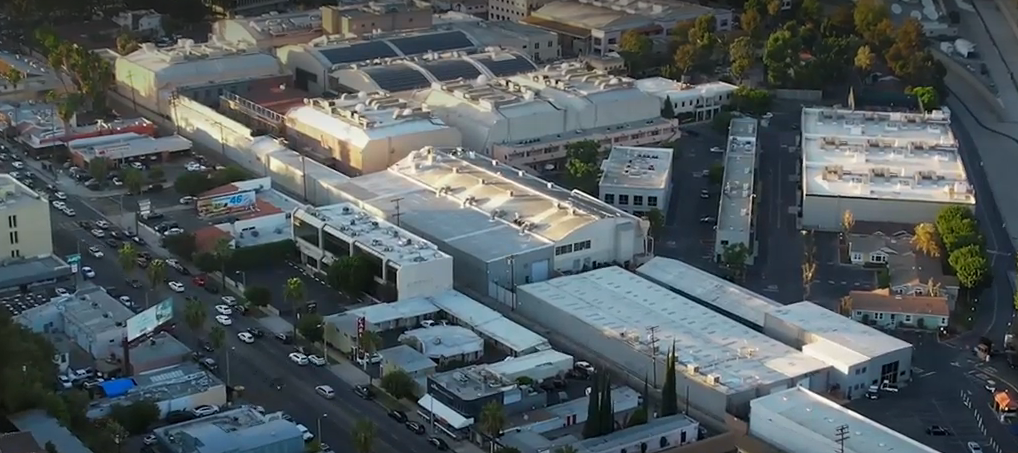
The streaming behemoth is quietly working out a deal to acquire the legendary Radford Studio Center in Studio City, a sprawling 55-acre lot where some of television’s most beloved shows were born. Two sources familiar with the transaction, who weren’t authorized to discuss it publicly, confirmed the negotiations are underway. The price being discussed — somewhere between $330 million and $400 million — tells a story all by itself.
Just five years ago, that same property sold for $1.85 billion.
That jaw-dropping markdown is less a fire sale and more a sobering snapshot of where the entertainment industry finds itself today. Hackman Capital Partners and Square Mile Capital Management had outbid everyone to snatch Radford from ViacomCBS back in 2021, betting that the insatiable hunger for streaming content would keep Los Angeles soundstages in perpetual demand. For a moment, it seemed like a masterstroke. Then reality arrived with a vengeance. The pandemic had already rattled the industry when the dual writers’ and actors’ strikes of 2023 brought productions to a grinding halt. Studios, having gorged themselves on streaming content, began tightening their belts dramatically. Productions drifted to other states and countries chasing tax incentives and lower costs. Hackman eventually buckled under the weight of a $1.1 billion mortgage it could no longer service, defaulting in January. Goldman Sachs stepped in and took control of the property, and now appears to have found a willing buyer in Netflix.
There’s something almost poetic about Netflix being the one to pick up the pieces. The company that arguably did more than any other to upend the traditional studio system is now moving to claim one of that system’s most storied physical landmarks. Radford’s history stretches back to 1928, when silent film comedy pioneer Mack Sennett first built the lot. In the postwar decades it earned the nickname “Hit City,” churning out one generation-defining show after another — “Gunsmoke,” “Leave It to Beaver,” “Gilligan’s Island,” “The Mary Tyler Moore Show,” “Seinfeld,” and “Will & Grace,” among countless others. The neighborhood itself took its name from the studio. To call the place historic would be an understatement.
Netflix, meanwhile, has grown into a colossus. With a market capitalization hovering around $455 billion — more than twice that of Walt Disney — and over 325 million subscribers worldwide, the company operates from a position of extraordinary strength. Its footprint in Hollywood is already massive; it’s the neighborhood’s largest commercial tenant, leasing roughly 1.5 million square feet of office and studio space. It owns the Egyptian Theatre. Its production work in the area is currently anchored at Raleigh Studios on Melrose Avenue, where it holds the anchor tenant agreement through 2030. Adding Radford to that portfolio would represent a significant escalation.
The company hasn’t publicly addressed what it intends to do with the property, though its iconic red logo seems likely to become a permanent fixture of the Studio City landscape. One thing worth noting is that Radford is largely a production facility — soundstages rather than offices — and Hackman’s ambitious plans to expand the site with additional stages and office space never made it off the drawing board.
This acquisition attempt follows a dramatic near-miss for Netflix on an even grander scale. Late last year the company had lined up an $82.7 billion deal to acquire Warner Bros.’ studios and streaming assets, only to walk away in February after Paramount Skydance swooped in with a competing offer. Netflix didn’t leave empty-handed — it collected a $2.8 billion termination fee on its way out the door — but Radford represents a far more modest and targeted bet. Rather than a sprawling media merger, this would be a strategic claim on physical infrastructure at a moment when that infrastructure has rarely been cheaper to acquire.
In a city where fortunes are made and lost on timing, Netflix appears to be playing a long game, buying premium Hollywood real estate at a discount while others are still nursing their wounds.


Recent Comments